The Wings Still Open at Noon: The Art Museum's Burke Brise Soleil
Santiago Calatrava gave Milwaukee a ship, a sail, and a daily performance — the museum's sunscreen wings flap at noon over Lake Michigan, and two decades on, the city still looks up.
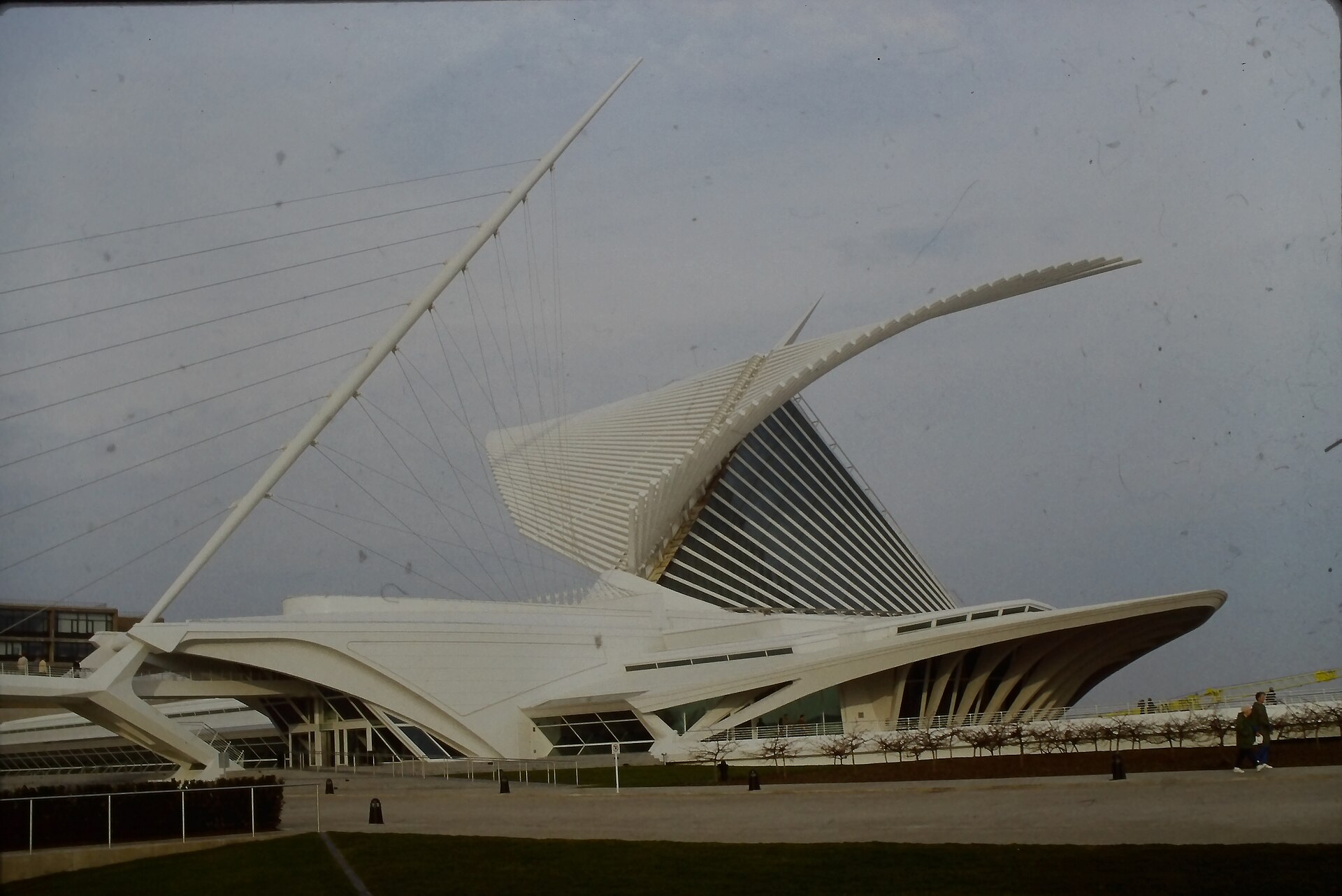
At noon, weather permitting, the wings move. The Milwaukee Art Museum's Quadracci Pavilion — Spanish architect Santiago Calatrava's first completed American building, opened in 2001 — carries a movable sunscreen of steel fins, a 217-foot wingspan called the Burke Brise Soleil, that opens each morning, closes each night, and performs a slow ceremonial flap at midday over the lakefront. It remains the most joyful piece of architecture in Wisconsin.

The pavilion remade the city's self-image as surely as its skyline: a white ribbed ship of a building, its mast leaning over Lake Michigan, its glass vaulted hall framing the water like a secular cathedral. Inside, the museum's collection runs to more than 30,000 works — Georgia O'Keeffe, Wisconsin's own daughter, among its strengths — across the pavilion and the older War Memorial and Kahler buildings stitched along the shore.
The wings have survived the lake's best shots — storms, ice, mechanical drama — and remain both sculpture and machine, maintained like a bridge because functionally they are one. Anniversaries bring the crowds; ordinary Tuesdays bring the school groups and the lunch-hour regulars who time their walk to the flap.
Cities get symbols by accident or by ambition. Milwaukee, a manufacturing town that builds things for a living, chose one that moves on schedule, weather permitting, like good machinery and good manners. Look up at noon.