
The Marquette Interchange: Five Levels of Downtown Milwaukee in Motion
It moves 300,000 vehicles a day through the heart of the city, stacked in sweeping concrete ribbons — and its 2008 rebuild remains the standard by which Wisconsin judges a highway project.
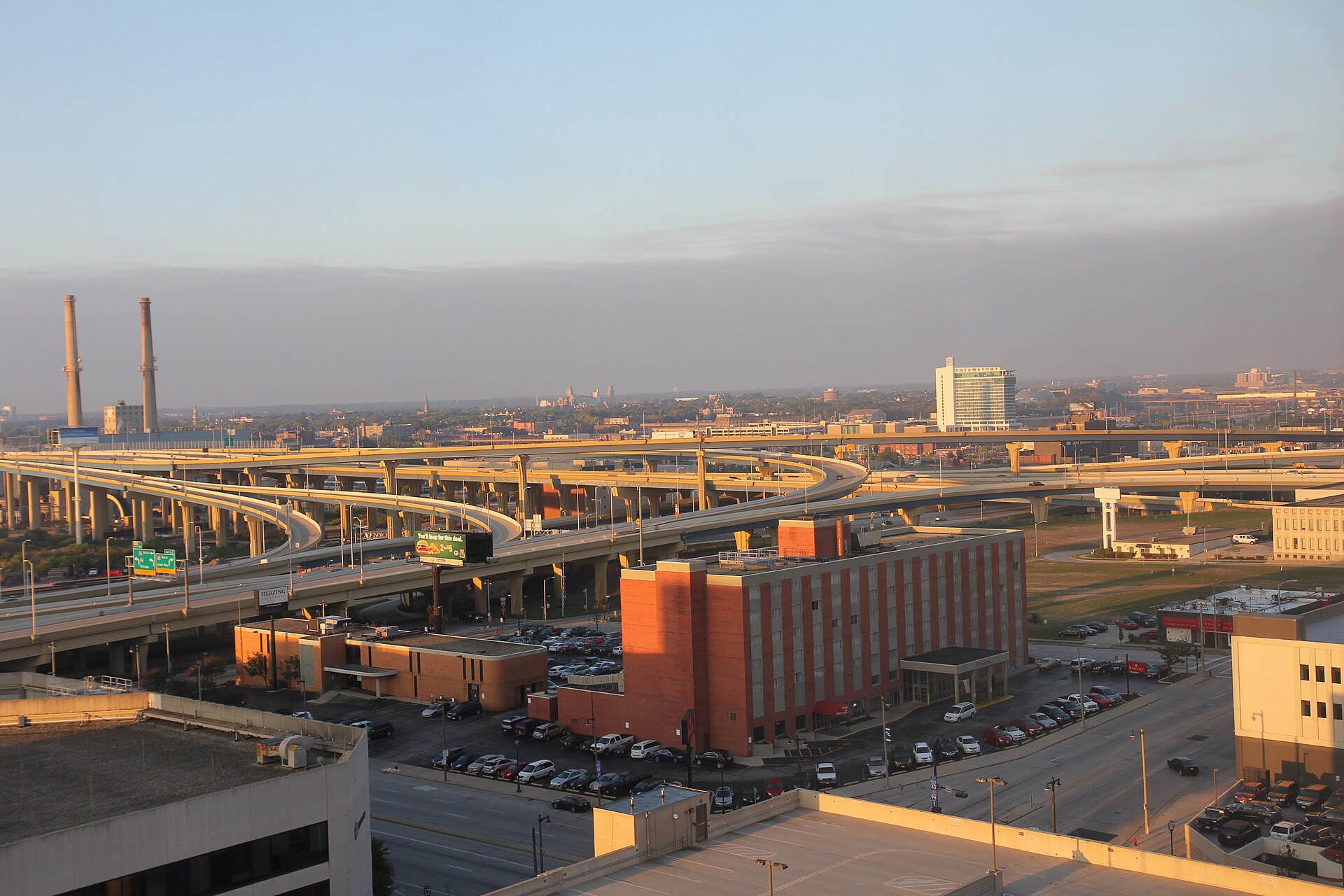
Stand on the Milwaukee River bridges at dusk and watch it work: the Marquette Interchange, where Interstates 43, 94, and 794 braid through downtown in five levels of sweeping ramps, carrying on the order of 300,000 vehicles a day past the skyline. It is the single most important piece of road in Wisconsin, and for a generation it was also the most feared — the original 1960s stack, with its left-hand exits and tight weaves, was a daily civics lesson in adrenaline.
The rebuild, finished in 2008, is the interchange's second reputation: a $810-million-scale reconstruction completed on time and under its revised budget in an era when neither was fashionable, with wider ramps, right-side exits, and a design that treated the city's skyline as something to frame rather than block. Engineers give tours of it. Commuters give thanks on it, mostly by no longer thinking about it, which is the highest honor infrastructure can earn.
The modern frictions are the ordinary ones that scale with success: I-94's east-west rebuild debates to the west, the I-43 work to the north, and the daily arithmetic of a metro that still drives to work. November adds its seasonings — the first lake-effect squalls hit the elevated decks before the surface streets even know it's snowing, and the high ramps ice first, exactly as the signs warn.
A city reveals its competence in its interchanges. Milwaukee's flagship, for seventeen years now, has been the one that works so well you forget it — which, over 300,000 vehicles a day, is the entire point.